

For mechanical parts export enterprises, building an independent foreign trade website is only the first step in overseas marketing. After the website goes live, if product pages are incomplete, keyword layout is inaccurate, and technical content is insufficient, even with rich products and production experience, it may still be difficult to obtain precise Google traffic and effective inquiries.
Unlike ordinary consumer goods websites, the procurement of mechanical parts often involves product specifications, materials, processing techniques, equipment compatibility, quality standards, and customization requirements. Overseas buyers not only need to find suitable products, but also need to judge whether suppliers have stable production capacity and delivery capability.
So, how should an independent foreign trade website for mechanical parts be operated? The following 8 methods deserve key attention.
Use overseas platforms to promote mechanical parts products
Mechanical parts enterprises should not rely only on Google organic search. They can also expand brand exposure through LinkedIn, YouTube, Facebook, industry directories, professional forums, and industry media.
Promotional content can focus on product applications, processing techniques, factory equipment, quality inspection, parts installation, and actual usage scenarios. For example, publish CNC precision machining processes, wear-resistant parts production videos, product size comparisons, and parts application cases, so that overseas buyers can intuitively understand the company's manufacturing capabilities.
In relevant content, potential customers can be guided to visit the corresponding product detail pages, application pages, or custom processing service pages, rather than having all promotional content link only to the homepage.
If using Google Ads or other commercial advertisements, priority should be given to testing keywords related to specific products, application needs, and purchasing intent, and the advertising effectiveness should be evaluated based on actual inquiry quality.
Continuously improve product pages and technical content
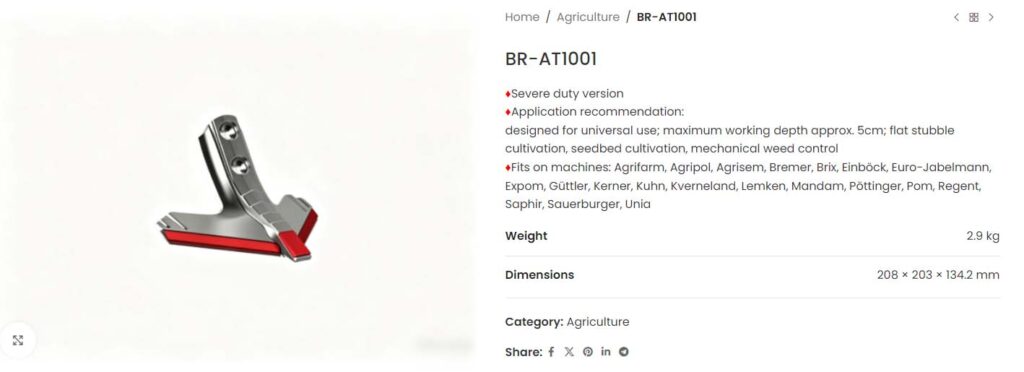
In the operation of a mechanical parts website, the first thing is to make product information complete. Uploading only product images and simple introductions is usually not enough to help overseas buyers judge whether the product meets their needs.
Enterprises can gradually improve the following information:
- Product specifications: Dimensions, materials, weight, tolerances, and other key parameters.
- Manufacturing process: Actual processes such as CNC machining, forging, casting, heat treatment, and surface treatment.
- Application scenarios: The equipment, industries, and working environments to which the product applies.
- Customization capability: Whether OEM/ODM, machining from drawings, customization from samples, or non-standard parts production is supported.
- Quality control: Material inspection, dimensional inspection, hardness testing, and related quality standards.
- Purchasing information: Packaging methods, delivery requirements, minimum order quantity, and other practical business information.
Optimize existing product pages to tap more search opportunities
Website operation should not focus only on adding new products. Pages that have already been indexed by Google or have gained search exposure are also worth continuous optimization.
Enterprises can use Google Search Console to check which product pages have gained exposure, which search terms have brought clicks, and which pages have exposure but lack visits.
For example, if a precision mechanical parts page has already gained exposure for related product terms, information such as material options, machining accuracy, applicable equipment, surface treatment, quality inspection, and customization process can be further improved.
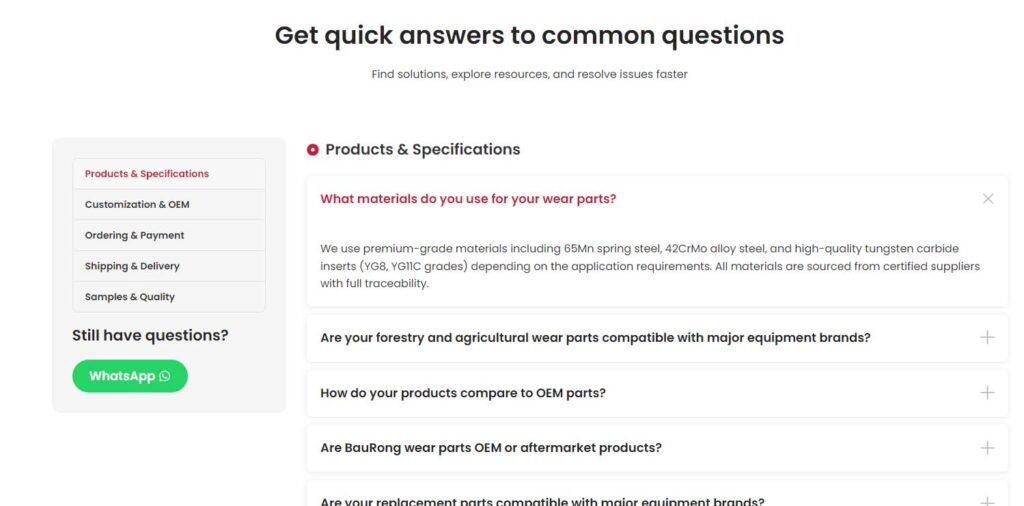
If customers often ask whether a certain part supports special sizes or can be machined according to drawings, these real needs can also be added to the FAQ on the product page.
Expand keywords and related pages around core products
Keywords in the mechanical parts industry often have strong product attributes and technical attributes. In addition to product names, expansion can also be carried out around materials, processing methods, equipment types, application industries, and purchasing needs.
For example, precision machining enterprises can research the following keyword directions based on their actual business:
- Product terms: CNC machined parts, precision machined components
- Processing methods: custom CNC machining, precision metal machining
- Purchasing needs: custom machined parts manufacturer, OEM precision components
- Application scenarios: automotive machined components, industrial machinery parts
In page planning, core product terms can be placed on product category pages and product detail pages, processing technique terms can be placed on corresponding service pages, and application industry terms can be placed on industry solution pages.
At the same time, use internal links among related product pages, processing service pages, and technical articles to establish clear topical associations and avoid concentrating all keywords on the homepage.
Find content topics from the real questions of overseas buyers
Mechanical parts enterprises should not rely only on keyword tools to plan content. Inquiries received by sales staff, technical questions raised by customers, and communication during the quotation process can all become sources of SEO content.
For example, customers may often ask:
- Can parts be customized according to drawings or samples?
- Which materials are suitable for high-temperature, high-wear, or corrosive environments?
- How to choose the right parts processing technique?
- How to confirm the compatibility of parts with existing equipment?
- What drawings and technical materials are required for custom parts?
- How to evaluate a supplier's machining accuracy and quality control capabilities?
These questions can be organized into technical blogs, purchasing guides, FAQs, or application cases, and the articles can link to the corresponding product pages or custom processing service pages.
Topics of concern to buyers can also be understood through LinkedIn industry discussions, YouTube comments, professional forums, and overseas competitors' websites, and then topics can be selected based on the enterprise's own professional experience.
Prioritize keywords highly related to products and purchasing needs
When mechanical parts companies do SEO, they should not only pursue broad keywords with high search volume.
For example,metal parts has a relatively broad meaning, while custom CNC machined aluminum parts can more specifically reflect the material, processing method, and procurement needs. For companies that actually provide custom aluminum alloy CNC machining, the latter may be more business-targeted.
Showcase manufacturing strength and enhance the trust of overseas buyers
Mechanical parts are B2B products with relatively high technical and quality requirements. When overseas customers visit a website, in addition to viewing products, they also judge whether the supplier has the corresponding production, inspection, and delivery capabilities.
Yijian believes that foreign trade websites need to continuously supplement content that can prove the company's strength, such as:
- Real photos of the factory environment, production equipment, and machining workshop.
- Explanations of main processing techniques and equipment capabilities.
- Material inspection, dimensional inspection, and quality control processes.
- Information on relevant certifications, inspection reports, and quality management systems.
- Typical product cases, industry applications, and actual cooperation experience.
- OEM/ODM, machining according to drawings, and custom production processes.
Provide this information truthfully and specifically, and provide images, parameters, or cases as support whenever possible.
Continuously optimize traffic and inquiries through data analysis
The operation of an independent foreign trade website for mechanical parts requires regular review, rather than only looking at website visits or the number of articles published.
Enterprises can use Google Search Console analyze organic search impressions, clicks, search terms, and page performance, and further observe traffic sources, form submissions, and customer conversion through Google Analytics 4 or an inquiry system.
Mechanical Parts Foreign Trade Website Design CaseShare:https://yijianwp.com/portfolio/industrial-website-design/