
The content of a foreign trade website is the core of the website's value. It can not only clearly show customers the company's strength, product advantages, and service capabilities, helping customers build trust and drive inquiry conversion, but also, through reasonable keyword layout, high-quality original content, and a clear page structure, help search engines better understand the website theme, thereby improving the website's indexing and natural search rankings. Good website content must both meet customer needs and conform to the way search engines understand content, so as to balance customer acquisition and SEO optimization. Presumably everyone already knows the importance of foreign trade website materials.
So, what materials need to be prepared before building a foreign trade website?
I. Basic company information
Company information is the most basic information of a foreign trade website. Overseas customers usually use this part to understand the company's background, business scope, and supply capacity.
- Company introduction: Highlight the founding time, company size, and main products, and you can also add application fields.
- High-definitionLogo: First choice .SVG vector graphics (can be enlarged infinitely without blurring); second choice .PNG, transparent; or design source files AI, CDR
- Factory photos: Can be workshops, factory signs, production equipment, exhibitions, etc., named with the corresponding English names (convenient for image Alt tag keyword optimization)
- Enterprise qualifications, certification certificates, and related honors: You can provide some ISO quality management system certifications, CE, RoHS and other product certifications, patent certificates, industry qualifications, awards and honors, and other related certificates that can prove the company's strength and product quality.
- Social platforms: Youtube, Tiktok, Facebook, LinkedIn, Instagram, etc. (add the official homepage links of social platforms to the bottom Footer column and make them into a Follow Us feature)
- Smtp email: The purpose of this email is that the website will use this email to forward form information to your designated inbox.
II. Product materials
Product materials are one of the most important contents of a B2B foreign trade website. The clearer the product information, the easier it is for overseas buyers to judge whether the product meets their needs.
- Product categories: Classify and organize the company's products. A product category is the collective name of the products and can be understood as the parent level of the products. For example, mobile phones are the first-level category, Huawei phones are the second-level category, and Mate60 is the product. Organize the corresponding category representative image for each category (the category image should be representative or distinctive), and name the image with the product category name, which is convenient for Alt keyword optimization after uploading to the website.
- Product images: Divided into product main image and product detail image
Product content: Brief product introduction, main features and advantages, product parameters, etc. For details, you can refer to how to create a high-quality product detail page:https://yijianwp.com/b2b-product-page-design/

III: Enterprise advantages
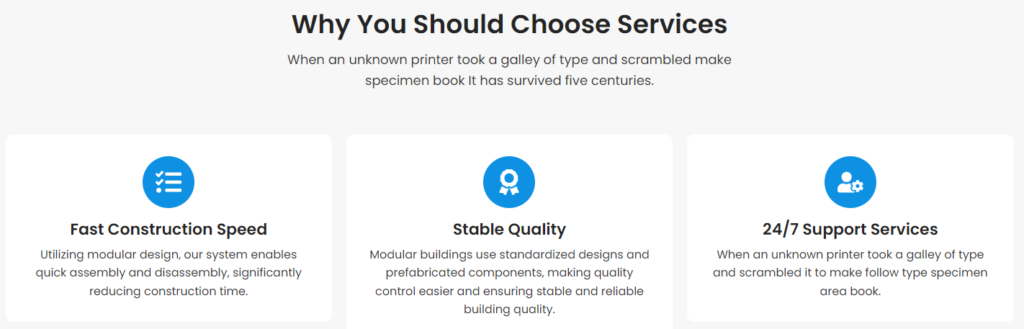
The enterprise advantages of a foreign trade website can be organized from aspects such as production strength, product advantages, customization capability, quality assurance, industry experience, delivery capability, and cooperation cases. Each advantage has a separate subtitle and a brief introduction.
If you are preparing to build a B2B foreign trade independent website, you can prepare these basic materials according to the checklist above. If you cannot organize such detailed materials, it does not matter. You can start with the company introduction, core products, target market, and reference websites, and gradually supplement other content during the website planning and production process.