
Google's search process mainly includes Crawling, Indexing, and Serving three stages. A page being crawlable by Google does not mean it will definitely be indexed; even if it has entered the index, it does not mean it will definitely obtain search rankings.
For Google, websites that have been online for less than 6 months or websites that have not been operated are usually new sites, belonging to the early stage of website SEO. At this stage, Google needs to gradually discover, crawl, and understand website content. The website's indexing volume, keyword rankings, and search traffic are often still unstable, and its authority and trust are relatively low.
Therefore, after a website goes online, doing a good job in website operations is very important. In today's lesson, let's talk about how to improve website indexing.
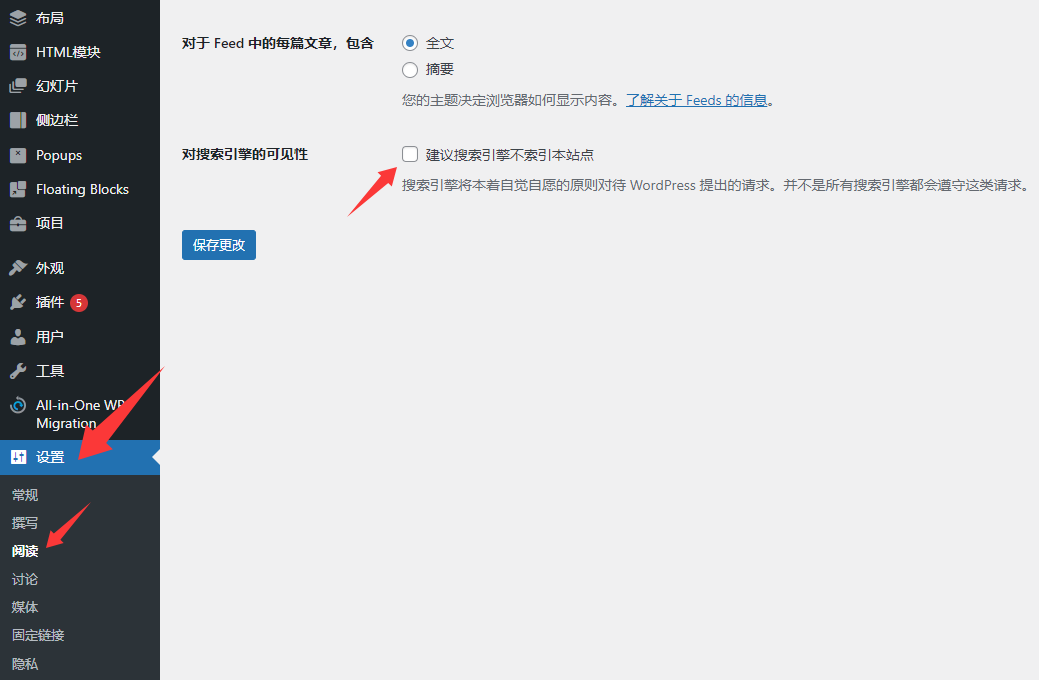
Check search engine visibility settings
Troubleshooting Path:
Backend → Settings → Reading → “Discourage search engines from indexing this site”
✅ Correct Status: Not checked
❌ Common Mistake: Checked ”Under Construction” during site building, forgot to uncheck after going live
Submit a Sitemap for the website
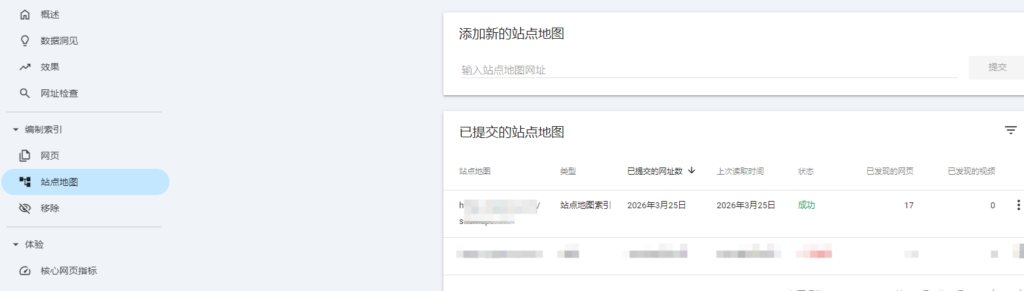
One of the ways for a newly launched website to speed up indexing is to submit the sitemap to Google Console, which helps search engine crawlers speed up the time to crawl page content. At the same time, Google Console can be used to view website traffic data, page clicks, and more;
Submission Path: GSC → Indexing → Sitemaps → Add a new sitemap
How to view the Sitemap XML site map:https://yijianwp.com/how-to-check-sitemap-xml/
Guide through internal website links
If a page is rarely linked to by other pages on the website, it may be harder for Google to discover it and understand its relationship with the entire website, especially newly published product pages and blog articles. Reasonable internal links can help Google discover pages faster, pass on topical relevance and importance between pages, and also make it easier for users to continue browsing related content. Therefore, after a website goes online, natural internal links should be established through navigation, category pages, product pages, blog articles, etc., so that important pages can be effectively linked by other relevant pages. At the same time, through internal link guidance, adding links from high-authority pages to unindexed pages can accelerate page indexing.
Help Google discover website pages through external links
In addition to submitting a Sitemap and doing a good job with internal links, you can also usehigh-quality external linksto help Google discover and crawl website pages. When other websites, industry platforms, business directories, or social media pages naturally link to your website, Googlebot can discover new URLs through these links.
Specific methods for obtaining backlinks include:
Publish company information on industry B2B platforms and add official website links
You can choose high-quality B2B platforms related to your own industry (for example, machinery companies can look for B2B platforms related to mechanical equipment and industrial manufacturing, and furniture companies can look for platforms in the furniture and home furnishing industry), industry directories, and business yellow pages, register and complete information such as company name, main products, company profile, and contact information, and add official website links or related product page links when the platform allows it. If the platform does not allow links, you can guide customers to search for our company name on Google to find the website, which is also beneficial for website optimization;
Participate in discussions on review and Q&A platforms
You can participate in real discussions onQ&A platforms, professional forums, blog comment sections, and industry communitiesrelated to your industry, and when answering user questions or sharing professional experience, naturally mention your official website or related pages as needed based on the content. When doing this, the main focus should be onsolving problems and providing valuable information, and only add links when the official website content can further help users. Avoid mass-copying the same content, posting comments in bulk, or forcibly inserting URLs, otherwise the backlink value will not only be limited, but the content may also be deleted by the platform.
Showcase foreign trade products on portfolio platforms such as Behance
You can organize the company'sproducts, product series, application scenarios, and factory strengthinto project content, publish it on portfolio display platforms such as Behance and Dribbble, and add official website links in allowed positions in the project introduction or personal homepage.
Improve the company's social media homepage and add official website links
You can establish and improve the company homepage on LinkedIn, Facebook, X, Instagram, YouTube and other social platforms suitable for the company's business, fill in a consistent company name, brand introduction, main products, contact information, and official website address, and regularly publish content such as products, factories, customer cases, exhibitions, and industry news. When the platform allows it, place the official website link in the company homepage's Website, About, Bio and other positions, and naturally guide users in related content to visit the official website product pages or service pages. This can increase corporate brand exposure and external entry points to the website, and also help Google discover the website; at the same time, company information should be kept consistent and operations should continue, avoiding merely registering an account without updating it for a long time.
Continuously update website content and optimize pages that have already been published
Try to keep the website updated or optimized every week. Updates can add or improve product pages, news, customer cases, FAQs, etc., providing Google with more content that can be crawled and indexed. At the same time, also optimize product and news pages that have already been published, including SEO title optimization, optimization of the first paragraph of page text, product information, parameters, application scenarios, cases, images and ALT tags, etc. Also improve internal links and establish natural links between old and new pages, which can help Google discover some pages that were originally not easy to crawl.